|
|
Last
Modified on
Sep 08, 2026
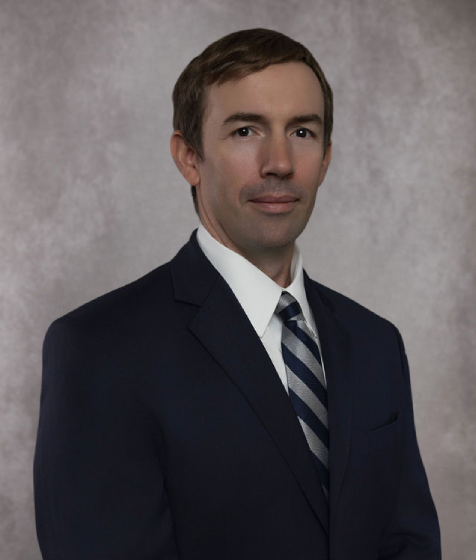
By Patrick J. Eskew, Louisiana Motor Vehicle Accident Attorney | Blake Jones Law Firm, LLC | Licensed in Louisiana
On January 1, 2026, Louisiana replaced its pure comparative fault rule with a modified one that bars recovery entirely once a jury assigns you 51% of the fault, under Acts 2025, No. 15, amending La. Civ. Code art. 2323. That change makes an older doctrine more dangerous than it has ever been: the empty chair, Louisiana’s rule letting a jury assign a share of fault to someone who isn’t even a party to the lawsuit. I’ve handled crash cases across Vermilion, St. Martin, St. Mary, and Iberia Parishes where an insurance company’s entire defense came down to blaming a driver, a company, or an employer who never sat at the defense table.
What Is Louisiana’s Comparative Fault Rule Now?
Louisiana’s comparative fault statute used to be about as forgiving as it gets. Under the old rule, you could recover something even if a jury found you 99% at fault. That ended on January 1, 2026. Under the amended version of Article 2323, a claimant found “equal to or greater than fifty-one percent” at fault recovers nothing at all. Below that line, your damages are still reduced by your percentage of fault, the same as before.
Key fact: Louisiana’s comparative fault rule flipped on January 1, 2026, under Acts 2025, No. 15. Crashes before that date are still governed by the old pure-fault rule with no cutoff; crashes on or after that date fall under the new 51% bar, where a single percentage point can wipe out an entire claim.
That one-point swing is exactly why the empty chair defense deserves more attention now than it ever did before.
What Is the Empty Chair Defense?
Louisiana law doesn’t require every at-fault party to sit in the courtroom before a jury can blame them. Article 2323 tells the factfinder to determine the percentage of fault for all persons who caused or contributed to the injury, regardless of whether that person is a party to the suit, insolvent, immune from suit by statute, or unidentifiable. Lawyers call this the empty chair. The chair for the absent party sits empty at trial. Their fault doesn’t.
Louisiana didn’t always work this way. A 1996 legislative amendment broadened the rule after years of court decisions that limited fault allocation mostly to the actual parties in a case. Today’s version is wide open, and defense lawyers use it constantly in car and truck litigation. When you sue one driver, an insurer’s attorney may spend the entire trial trying to convince the jury that somebody else, somebody you never sued, deserves most of the blame.
When a jury has to split fault among several people, including someone who isn’t in the room, Louisiana courts direct them to weigh specific factors: how aware each person was of the danger they created, how serious that risk was, and how directly their conduct actually caused the harm, among the factors set out in Watson v. State Farm Fire & Casualty Ins. Co., 469 So. 2d 967 (La. 1985). Those factors apply whether every blamed party showed up to trial or not.
How the Empty Chair Plays Out in Acadiana Crash Cases
Here are four situations I see regularly, each one showing a different way the empty chair defense gets used against injured people in this part of the state.
The Phantom Driver on LA Highway 14 in Vermilion Parish
A driver runs a stop sign near Abbeville, forces our client off the road, and disappears before anyone gets a plate number. Louisiana’s uninsured motorist statute, La. R.S. 22:1295, lets you recover from your own UM coverage for injuries caused by an unidentified vehicle, even without physical contact, but only if you can produce testimony from an independent, disinterested witness who saw it happen. Your UM insurer effectively stands in for the phantom driver, yet the phantom driver remains an empty chair. Expect the insurer to argue the fleeing driver deserves most of the fault while your own conduct gets blamed for a chunk more, pushing your total closer to that 51% line. Cases like this, filed in the 15th Judicial District Court for Vermilion, Acadia, and Lafayette Parishes, live or die on whether you found that witness before their memory faded.
A Settled Trucking Company on the Atchafalaya Basin Bridge in St. Martin Parish
A tractor-trailer jackknifes on I-10 crossing the Atchafalaya Basin, and your client’s car ends up in the pileup. The trucking company’s insurer settles early for policy limits, and the injured driver then pursues the remaining underinsured motorist for the rest. The remaining defendant’s lawyer will ask the jury to allocate a large share of fault to the trucking company that already paid and settled out, because Article 2323’s “regardless of whether the person is a party to the action or a nonparty” language lets a settled defendant’s empty chair still get weighed for fault purposes, even without them present to defend the number. Our firm has written before about how freight brokers and motor carriers get held accountable in Louisiana, and cases venued in the 16th Judicial District Court in St. Martinville are no exception to that fight.
An Immune Employer on a Delivery Route Through Franklin, St. Mary Parish
A commercial driver making deliveries through Franklin gets hurt when his own employer’s poorly maintained van collides with another motorist who ran a stop sign. Because he was injured on the job, workers’ compensation is his exclusive remedy against his own employer, so he can’t sue his employer in tort. He can sue the other driver, though, and that driver’s insurer will try to point at the employer’s worn brakes. Louisiana courts require the jury to quantify the employer’s share even though the employer can never be named as a defendant, a rule the Louisiana Supreme Court addressed in Gauthier v. O’Brien, 618 So. 2d 825 (La. 1993). Here’s the better news for the injured worker: under Gauthier’s approach, the employer’s assigned share doesn’t come out of his own recovery. Courts reallocate it among the remaining, non-immune parties instead. The empty chair still gets weighed. It just doesn’t automatically leave the hurt worker holding the bag for someone he was never allowed to sue.
An Uninsured Driver Nobody Bothered to Sue on US Highway 90 in New Iberia, Iberia Parish
A three-car pileup near New Iberia involves a driver who caused the crash but carried no insurance and had no meaningful assets. Naming him as a defendant would have accomplished nothing, so your attorney sensibly sued only the two insured drivers. One of those defendants’ insurers will still argue that most of the fault belongs to the uninsured driver who was never sued, since he contributed nothing toward the actual recovery either way. That argument can knock down what the insured defendant owes, even though it leaves the hurt plaintiff with a smaller, uncollectible slice of blame sitting on an empty chair. Cases like this, filed in the 16th Judicial District Court in New Iberia, get decided by whoever builds the better record early: police reports, event data recorder downloads, dashcam and traffic camera footage, and witness statements pinning down exactly what each driver did.
How I Fight the Empty Chair Defense
If you walked into my office tomorrow with a crash case anywhere in Acadiana, here’s what I’d want locked down before the defense gets a chance to build its empty-chair argument:
- Photographs taken at the scene, right after the crash, of every vehicle involved, everyone hurt, and the surrounding road, skid marks, signage, and weather conditions
- Every potentially at-fault party identified before filing suit, not after
- Event data recorder and black-box downloads pulled before they’re overwritten
- For commercial vehicles, the carrier’s DOT number and cab-door photographed at the scene, not reconstructed months later
- Independent, disinterested witnesses located and statements taken while memories are fresh
- An accident reconstructionist retained early enough to counter an inflated empty-chair percentage before it ever reaches a jury
Nearly everyone carries a phone with a camera these days. Use it before you leave the scene, not after.
Since January 1, 2026, I’m also running the 51% math on every file the day it comes in. A combination of a modest share assigned to you and a modest share assigned to an empty chair can tip a perfectly good claim past that line. That math isn’t optional anymore.
Frequently Asked Questions
Does the new 51% rule apply to my accident?
It depends on when your crash happened. Accidents before January 1, 2026 are still governed by the old pure comparative fault rule, with no cutoff on recovery no matter your percentage of fault. Accidents on or after that date fall under the amended Article 2323 and its 51% bar.
Can an insurance company really blame someone who was never sued?
Yes. Louisiana’s comparative fault statute requires the jury to assign a percentage of fault to every person who contributed to the accident, whether or not that person is a party, insolvent, immune from suit, or never identified. That’s the empty chair, and defense attorneys use it in nearly every multi-vehicle case I handle.
What if the driver who caused my crash fled the scene and was never found?
You can still recover through your own uninsured motorist coverage under La. R.S. 22:1295, but the statute requires an independent, disinterested witness to confirm what happened. Without that witness, a phantom-vehicle claim gets a lot harder to prove.
Will I recover less because of the empty chair defense?
Sometimes, and sometimes not. When the absent party is an immune employer, Louisiana’s Gauthier rule keeps that share from coming out of your own pocket. When the absent party is a phantom driver, a settled company, or an uninsured individual, an aggressive, well-documented investigation is what keeps the jury from handing that party more blame than the facts actually support.
The bottom line: an empty chair at trial doesn’t have to mean an empty recovery for you, but only if someone builds the record to prove who really caused your crash.
If you were hurt in a crash anywhere from Abbeville to Franklin to New Iberia, don’t let an insurance company’s empty chair argument decide your case for you. Call me before you give a recorded statement.
Sources
- La. Civ. Code art. 2323, as amended by Acts 2025, No. 15 (eff. Jan. 1, 2026), Louisiana Legislature
- 2025 Regular Session House Bill 431 (Rep. Emily Chenevert), enacted as Act 15, Louisiana Legislature bill history
- Watson v. State Farm Fire & Casualty Ins. Co., 469 So. 2d 967 (La. 1985), Justia
- Gauthier v. O’Brien, 618 So. 2d 825 (La. 1993), Justia
- La. R.S. 22:1295 (uninsured motorist coverage, unidentified vehicles), Justia
- 15th Judicial District Court (Vermilion, Acadia, Lafayette Parishes), 15thjdc.org
- 16th Judicial District Court (Iberia, St. Martin, St. Mary Parishes), 16jdc.org