|
|
Last
Modified on
Sep 22, 2026
A negligence case out of California’s Inland Empire just got a lot more interesting for anyone who follows freight broker liability. Lawyers for a young crash victim and her stepfather have amended their complaint to add C.H. Robinson and its customer, Unilever, as defendants, arguing that the load involved in the crash was handed off to a carrier nobody had approved to haul it. The amended pleading, filed in the Superior Court of California, County of San Bernardino under Case No. CIVSB2505947, lands squarely inside the legal terrain our firm has been tracking since the Supreme Court’s ruling in Montgomery v. Caribe Transport.
The carrier on the broker’s paperwork was not the carrier that showed up to drive it.

What Happened on the Highway Near Adelanto
On June 20, 2024, a tractor-trailer plowed into a line of vehicles stopped for highway construction near Adelanto in the Mojave Desert, triggering a six-vehicle pileup. Dalilah Coleman, five years old at the time, suffered a fractured skull, a broken femur, and brain swelling severe enough to require multiple surgeries; she has spent much of the time since relearning how to walk, eat, and speak. Her stepfather, Michael Krause, was also hurt in the crash.
C.H. Robinson had brokered that load. Unilever, doing business in the U.S. as Conopco, Inc., paid to move it.
According to the complaint, the shipment originated at a U.S. Cold Storage warehouse in Bakersfield and was headed to a Target distribution center in Rialto. C.H. Robinson assigned the haul to a carrier called VVS Trans. The truck that pulled up at the warehouse, though, carried placards and a DOT number belonging to a different company entirely: US Jet Trans, a carrier whose operating authority had reportedly been inactive for close to a year.
Nobody caught the swap before the truck pulled onto the highway.
The Claims Against the Broker and the Shipper
The amended complaint frames this as more than a one-off screening failure. It alleges negligent carrier selection and negligent brokerage system management, arguing that C.H. Robinson and Unilever failed to:
- Confirm that the carrier physically picking up the freight matched the carrier the broker had assigned
- Maintain gatekeeping procedures capable of catching an unauthorized carrier substitution
- Verify the driver’s authorization before the truck ever left the warehouse
This is a systems argument, not a one-driver problem. That’s the real claim here, and it is also exactly the kind of claim the Supreme Court cleared a path for back in May.
Why Montgomery Makes This Case Possible
For years, brokers leaned on the Federal Aviation Administration Authorization Act’s preemption clause to get negligent-selection claims thrown out before trial ever started. That changed when the Supreme Court ruled unanimously in Montgomery v. Caribe Transport II, LLC, 608 U.S. ___ (2026), that the FAAAA’s safety exception, codified at 49 U.S.C. § 14501(c)(2)(A), preserves state-law negligence claims against brokers who select unsafe or unauthorized carriers. I wrote about that ruling when it came down, and the Coleman case shows exactly why it matters. Without Montgomery, C.H. Robinson would likely have moved to dismiss these claims before the parties ever got near a jury.
The bottom line: a federal preemption defense that once ended these cases early no longer works the same way, and brokers now have to defend their carrier-vetting systems on the merits.
Our firm argued this same basic theory before Montgomery ever existed. Blake Jones and I secured one of Louisiana’s first verdicts holding a freight broker and shipper vicariously liable for a trucking crash in Knoten v. Westbrook, 193 So.3d 380 (La. App. 4th Cir. 2016), a verdict that topped $90 million. The Coleman complaint applies that same logic to a different fact pattern. Instead of a broker hiring a carrier with a documented poor safety record, this is a broker and its shipper allegedly failing to notice the carrier had been swapped out entirely.
What About Unilever? A Shipper’s Own Duty to Check the Name on the Truck
Broker liability isn’t the only theory in this case. Unilever is named as a defendant too, and shippers sit on different legal ground than brokers do.
Under ordinary negligence law, a company that hires an independent contractor can be liable for negligently selecting an incompetent one. That doctrine traces to Restatement (Second) of Torts § 411, and it exists apart from the broker-specific preemption fight Montgomery resolved. That distinction matters here: the FAAAA’s preemption clause, 49 U.S.C. § 14501(c)(1), reaches only a “motor carrier,” “broker,” or “freight forwarder” by its own text. A shipper isn’t on that list. Ordinary shipper-negligence claims were arguably never blocked by federal preemption in the first place.
But shipper liability has real limits, and Texas just drew a sharp one. In In re Home Depot U.S.A., Inc., No. 25-0317 (Tex. May 15, 2026), the Texas Supreme Court held that a “passive” shipper, one that doesn’t own, operate, or control the transportation and whose cargo poses no unusual risk, owes no duty to the driving public simply because it hired a federally regulated carrier. The court’s own words: Home Depot’s goods “were but a passenger: onboard but uninvolved in the accident.”
Worth noting: Home Depot came down one day after Montgomery, and the opinion doesn’t cite Montgomery or engage FAAAA preemption at all. Its passive-shipper rule rests entirely on ordinary common-law duty analysis, not on the federal safety-exception reasoning that reshaped broker liability the day before. The two rulings never had to speak to each other, which means Texas’s shield for passive shippers hasn’t yet been tested against the same framework that now exposes brokers.
That ruling doesn’t bind a California court hearing the Coleman case, and it wouldn’t bind a Louisiana court either. But it previews exactly the argument Unilever’s lawyers will make.
Here’s the distinction that matters, though. Home Depot asked whether a shipper has to investigate a carrier’s competence before hiring it. The Coleman complaint alleges something narrower, and harder to wave off: that the freight left the warehouse in the hands of a company that was never assigned to haul it at all, with nobody checking the name on the truck against the name on the paperwork. That isn’t a vetting failure. It’s a question that never got asked.
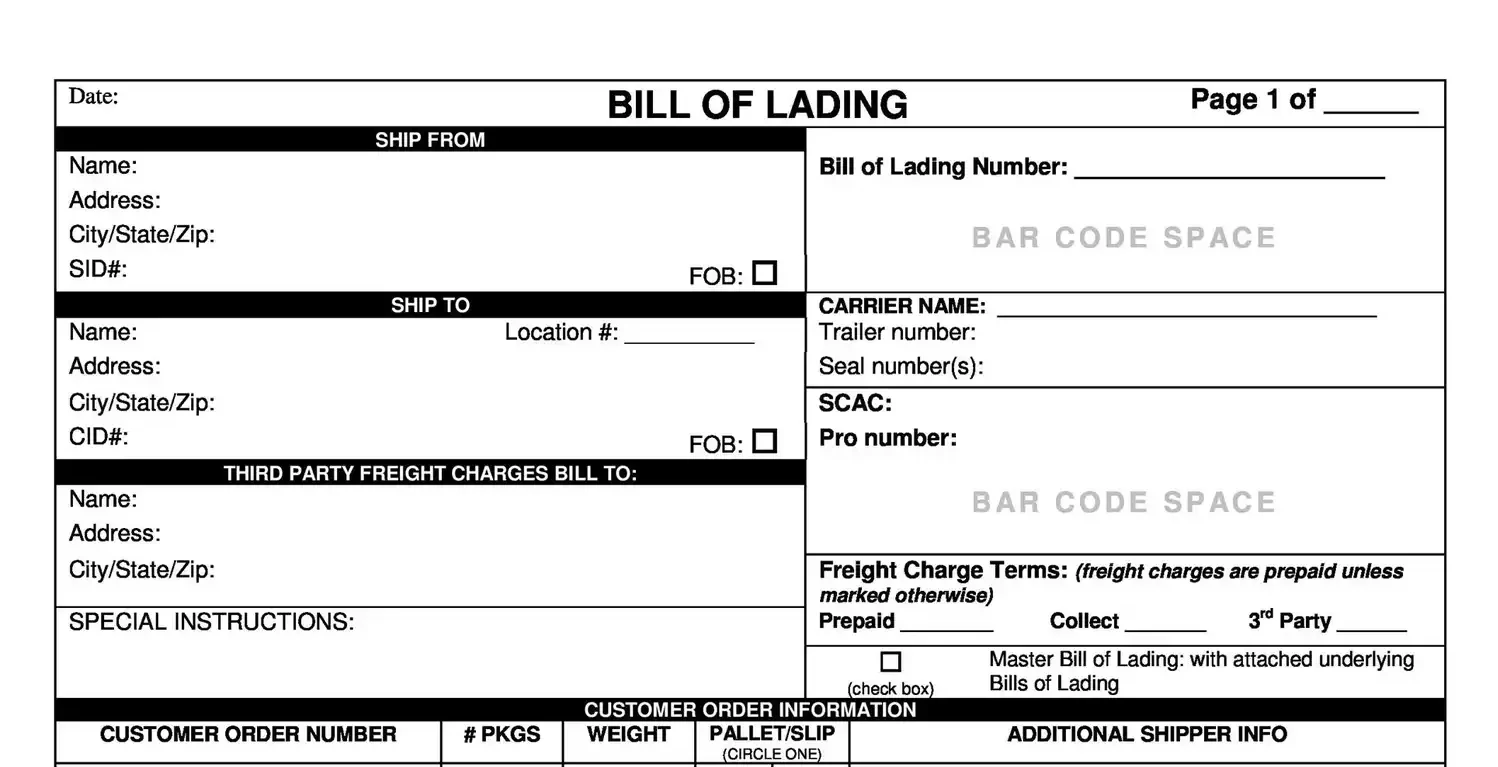
I use this rule with clients evaluating a shipper’s exposure: does the name on the placard and the cab door match the name on the bill of lading and the rate confirmation? If a warehouse or dock crew releases a loaded trailer without asking that one question, the shipper isn’t relying on a carrier it vetted. It’s handing the load to whoever shows up.
Whether that becomes liability for Unilever depends on facts nobody outside the litigation has yet, including how much control Unilever’s logistics team or the Bakersfield warehouse exercised over the pickup. But the theory isn’t far-fetched.
A Familiar Pattern: Carriers That Aren’t Who They Say They Are
Carrier substitution isn’t new, and it doesn’t always involve criminal intent. Sometimes a legitimate carrier subcontracts a load without telling the broker. Sometimes a carrier with revoked or inactive authority runs under another company’s placards to keep moving freight. I’ve written before about how these “chameleon” carriers hide behind someone else’s safety record, and the Coleman case is a real-world version of that same failure: a broker’s system that didn’t catch a carrier operating under another company’s authority.
Cassandra Gaines, founder of the carrier-vetting firm Carrier Assure, has pushed the industry toward standardized verification protocols for exactly this reason: confirming, at pickup, that the truck and driver on-site match what the broker assigned on paper. That confirmation didn’t happen here. At least, that’s what the complaint alleges.
Why This Isn’t Just a California Story
None of this stays in California. Freight brokered the same way moves through Louisiana every day: down the I-10 corridor between Texas and the Deep South, through the petrochemical corridor around Lake Charles and Calcasieu Parish, and along the maritime and offshore supply chain running through Morgan City and the rest of Acadiana. A broker or shipper that releases a load to whichever truck shows up doesn’t stop being negligent because the freight crossed a state line.
That’s exactly the exposure a Louisiana big rig accident attorney has to evaluate far more often than most people realize, and it’s why our firm treats broker and shipper liability as a first question, not an afterthought, on every serious trucking crash we take on. A truck injury lawyer in Louisiana who only checks the driver and the carrier on the door is leaving half the case on the table.
Six defendants are named in the Coleman case: C.H. Robinson, Unilever, US Cold Storage, VVS Trans, US Jet Trans, and driver Partap Singh. A case with that many co-defendants raises a question I see constantly in Louisiana multi-vehicle wrecks: what happens to a plaintiff’s recovery if one of those defendants settles out or gets dismissed before trial? I broke down how Louisiana’s new 51% fault-bar rule changes that calculus for cases where a defense lawyer points at an empty chair. Under the old rule, blaming an absent party cost a defendant little. Under the new one, it can cost the plaintiff a lot more.
What This Means If a Broker-Arranged Load Hurt You or Your Family
If you were hurt by a truck, you may have no idea a broker was ever involved. An experienced trucking attorney will never assume that the broker’s name on the paperwork tells the whole story. Carrier substitution can only be proven with documentation that disappears fast, so acting early matters.
Here’s what I recommend anyone involved in an accident with an 18-wheeler do:
- Photograph the truck’s DOT number and the cab door markings at the accident site before the vehicle is moved
- Request the broker’s carrier assignment records and rate confirmation through discovery as early as possible, before they go missing
- Check whether the carrier’s operating authority was active on the date of the crash; FMCSA’s SAFER system makes that a matter of public record
- Ask who dispatched the driver, not just whose name appears on the bill of lading
That DOT-number photograph sounds small. In cases like this one, it is often the single piece of evidence that proves a carrier substitution ever happened.
Frequently Asked Questions
Is a freight broker automatically liable when a substituted carrier causes a crash?
No. A plaintiff still has to prove the broker was negligent, meaning it failed to use reasonable care in selecting or monitoring the carrier. What Montgomery changed is that a broker can no longer get that claim dismissed simply by citing federal preemption.
Does the Montgomery ruling only apply in the circuit where that case arose?
No. It’s a Supreme Court decision, so it binds every federal court and guides every state court in the country. A broker in California is subject to the same FAAAA safety-exception analysis as a broker in Louisiana.
Does a shipper have to verify that the truck picking up its freight matches the carrier it was assigned to?
That question hasn’t been squarely decided. Under In re Home Depot U.S.A., Inc. (Tex. 2026), a passive shipper generally doesn’t have to investigate a carrier’s safety record before hiring it. But that case was about competence, not identity, and the court was careful to note Home Depot never owned, controlled, or employed anyone involved in the haul. Whether a shipper also has to confirm that the company physically taking the freight is the company it assigned is a different, largely untested question, and it’s the one Unilever is now facing in the Coleman case.
I was hurt in a broker-arranged trucking crash outside Louisiana. Can your firm still help?
I’m licensed in Louisiana, Texas, Georgia, Washington, and Alaska, and I work with co-counsel elsewhere when a case calls for it. Call me and I’ll tell you honestly whether we can help or point you toward someone who can.